
Programs
Programs
-
The drop down menus have more details, but here is a list of all the courses at RTC.
- Advanced Drawing & Design
- Architectural Drawing & Design
- Automotive Technology
- Carpentry
- Collision Repair Technology
- Cosmetology
- Criminal Justice
- Culinary Arts
- Cyber Security Systems
- Early Childhood Development & VA Teachers for Tomorrow
- Electricity
- Emergency Medical Responder
- Emergency Medical Technician
- Emergency Medical Telecommunications
- Engineering Explorations
- Engineering Practicum IV
- Graphic Imaging Technology
- Introduction to Health Medical Sciences
- Introduction to Engineering Design (PLTW)
- Master Barbering
- Medical Terminology
- Motorsports Technology
- Nurse Aide
- Pharmacy Technician
- Principles of Biomedical Sciences
- Principles of Engineering
- Restaurant Operations, Baking & Pastries
- Small Animal Care & Veterinary Sciences
- Software Engineering Essentials (PLTW)
- Sports Medicine/Athletic Training
- Unmanned Aircraft Systems
- Welding
-
Governor's STEM Academy
The Governor's Career and Technical Education (CTE) Academy for Science, Technology, Engineering, and Math (STEM)
Academy Goals and Description: The Governor’s Career and Technical Education Academy for STEM in Richmond (GSA) offers Richmond Public School students a rigorous academic and technical program of study in two career pathways (Engineering and Technology and Therapeutic Services). Courses emphasize in-depth understanding, connect new ideas to prior knowledge, encourage exploration, and help students construct meaning from course content.
The pathways are a combination of academic and technical study that integrates classroom and real-world learning. Hands-on project-based instruction is used in the high school and summer school program components. Academy coursework, teacher professional development, academic support, career and college development activities, along with parent and community involvement create a STEM community of learners.
The Academy raises student aspirations and attracts more students to postsecondary education in preparation for technical careers. Students will follow the RPS SCORE guidelines for conduct and attendance.
Engineering & Technology Pathway
In this career pathway, students apply engineering and technical concepts to develop solutions for problems that exist throughout a broad range of fields. Students take courses to prepare them for technical or professional programs of higher education, such as STEM careers, engineering or architecture.
Consistent with their abilities, interests, and educational needs, students completing a technology education program will achieve the following goals:
- Comprehend the dynamics of technology, including its development, impact, and potential.
- Employ the technological processes of problem-solving, creating and designing.
- Analyze the behavior of technological systems and subsystems, including the tools, materials, processes, energy, time, information, and people involved in systems.
- Apply scientific principles, engineering concepts, and technological systems in the processes of technology.
- Discover and develop personal interests and abilities related to a wide variety of technology-oriented careers.
By the completion of the four year program, students will have had the opportunity to earn several industry credentials including Workplace Readiness Skills Assessment, AutoDesk industry software (Inventor, Revit, & Fusion) and Project-Lead-the-Way assessments. These credentials prepare students for college and career options after graduation.
In addition, students can:
- Participate in the Technology Student Association (TSA) and the National Technical Honor Society (NTHS)
- Engage in high quality work-based learning opportunities such as internships, and apprenticeships.
- Earn the VDOE Career and Technical Education (CTE) Seal in addition to a variety of other seals depending on their overall high school performance
Sample Graduation Plan
** At least 3 years of a language is required for the Advanced Diploma
NOTE: Students should plan their four-year academic career plan carefully with their home school counselor.
Courses
Introduction to Engineering Design (PLTW)
In this foundation course in Project Lead the Way (PLTW), students use 3D computer modeling software as they learn the engineering-design process and solve design problems for which they develop, analyze, and create product models. Contextual instruction and student participation in co-curricular career and technical student organization (CTSO) activities will develop leadership, interpersonal, and career skills. High-quality work-based learning (HQWBL) will provide experiential learning opportunities related to students' career goals and/or interests, integrated with instruction, and performed in partnership with local businesses and organizations.
Engineering Explorations
In Engineering Explorations I, students examine technology and engineering fundamentals in relation to solving real-world problems. Students investigate engineering history, including major engineering accomplishments, and their effect on society. They also examine engineering specialty fields and their related careers. Students practice engineering fundamentals and apply the engineering design process through participation in hands-on engineering projects. Students communicate project-related information through presentations, proposals, and technical reports. Contextual instruction and student participation in co-curricular career and technical student organization (CTSO) activities will develop leadership, interpersonal, and career skills. High-quality work-based learning (HQWBL) will provide experiential learning opportunities related to students' career goals and/or interests, integrated with instruction, and performed in partnership with local businesses and organizations.
Principles of Engineering (PLTW)
In this Project Lead the Way (PLTW) course, students explore the engineering profession and the fundamental aspects of engineering problem solving. Students study the historical and current impacts of engineering on society, including ethical implications. Mathematical and scientific concepts will be applied to fundamental engineering topics, including mechanics and electrical-circuit theory. Contextual instruction and student participation in co-curricular career and technical student organization (CTSO) activities will develop leadership, interpersonal, and career skills. High-quality work-based learning (HQWBL) will provide experiential learning opportunities related to students' career goals and/or interests, integrated with instruction, and performed in partnership with local businesses and organizations.
Architectural Drawing and Design
Students learn the principles of communicating architecture designs and increase their understanding of working drawings and construction techniques learned in Technical Drawing and Design. Experiences include residential and commercial building designs, rendering, model development, and structural detail developments. Students use computer-aided drawing and design (CADD) equipment and established standards or codes to prepare models for presentation. The course is especially beneficial to future architects, interior designers, or home builders. Contextual instruction and student participation in co-curricular career and technical student organization (CTSO) activities will develop leadership, interpersonal, and career skills. High-quality work-based learning (HQWBL) will provide experiential learning opportunities related to students' career goals and/or interests, integrated with instruction, and performed in partnership with local businesses and organizations.
Software Engineering Essentials (PLTW)
Students will experience the major topics, big ideas, and computational thinking practices used by computing professionals to solve problems and create value for others. This course will empower students to develop computational thinking skills while building confidence that prepares them to advance to Computer Science Principles and Computer Science A. Contextual instruction and student participation in co-curricular career and technical student organization (CTSO) activities will develop leadership, interpersonal, and career skills. High-quality work-based learning (HQWBL) will provide experiential learning opportunities related to students' career goals and/or interests, integrated with instruction, and performed in partnership with local businesses and organizations.
Advanced Drawing and Design
Students use graphic language for product design and technical illustration. They increase their understanding of drawing techniques learned in the Technical Drawing and Design (8435/8434), Engineering Drawing and Design (8159) and Architectural Drawing and Design (8437/8492). Students research design-related fields while identifying the role of advanced drawing and design in manufacturing and construction industry processes. They apply the design process, analyze design solutions, reverse engineer products, create 3D solid models using computer-aided design (CAD), construct physical models, and create multimedia presentations of finished designs. Students will complete a work portfolio based on a chosen graphic project.
Contextual instruction and student participation in co-curricular career and technical student organization (CTSO) activities will develop leadership, interpersonal, and career skills. High-quality work-based learning (HQWBL) will provide experiential learning opportunities related to students' career goals and/or interests, integrated with instruction, and performed in partnership with local businesses and organizations.
Software Engineering (PLTW)
This Project Lead the Way course aims to develop students' computational thinking, generate excitement about career paths that utilize computing, and introduce professional tools that foster creativity and collaboration. Students develop programming expertise and explore the workings of the Internet. Projects and problems include app development, visualization of data, cybersecurity, and simulation. Contextual instruction and student participation in co-curricular career and technical student organization (CTSO) activities will develop leadership, interpersonal, and career skills. High-quality work-based learning (HQWBL) will provide experiential learning opportunities related to students' career goals and/or interests, integrated with instruction, and performed in partnership with local businesses and organizations.
Engineering Practicum IV
This course will enable students to examine technology and engineering fundamentals related to solving real-world problems. Students examine ethics and intellectual property and design a practicum project, a culmination of knowledge and skill gained in the previous engineering courses. In addition, students continue to investigate engineering specialty fields and related careers to determine whether they are good candidates for postsecondary educational opportunities in engineering. Contextual instruction and student participation in co-curricular career and technical student organization (CTSO) activities will develop leadership, interpersonal, and career skills. High-quality work-based learning (HQWBL) will provide experiential learning opportunities related to students’ career goals and/or interests, integrated with instruction, and performed in partnership with local businesses and organizations.
Health Sciences (Therapeutic)
* At least 3 years of a language is required for the Advanced Diploma
NOTE: Students should plan their four-year academic career plan carefully with their home school counselor.
Courses
Introduction to Health and Medical Sciences
This course introduces the student to a variety of healthcare careers and develops basic skills required in all health and medical sciences. It is designed to help students understand the key elements of the U.S. healthcare system and to learn basic healthcare terminology, anatomy and physiology for each body system, pathologies, diagnostic and clinical procedures, therapeutic interventions, and the fundamentals of traumatic and medical emergency care. Throughout the course, instruction emphasizes safety, cleanliness, asepsis, professionalism, accountability, and efficiency within the healthcare environment. Students also begin gaining job-seeking skills for entry into the health and medical sciences field. In addition, instruction may include the basics of medical laboratory procedures, pharmacology fundamentals, biotechnology concepts, and communication skills essential for providing quality patient care.
Principles of Biomedical Sciences (PLTW)
In this specialization course for Project Lead the Way (PLTW), students are taught concepts of forensic inquiry, DNA and inheritance, and the function of human body systems, exploring the body through diseases, such as those leading to diabetes and heart, sickle cell, and infectious diseases. Students also explore medical interventions, postmortem examination, bioprocessing, bioinformatics, and concepts of microbiology and genetic engineering.
Medical Terminology
Medical Terminology is designed to help students learn common medical terms essential for patient care. Topics are presented in logical order, beginning with each body system's anatomy and physiology and progressing through pathology, laboratory tests and clinical procedures, therapeutic interventions, and pharmacology. Students learn concepts, terms, and abbreviations for each topic.
Human Body Systems (PLTW)
In this specialization course for Project Lead the Way (PLTW), students explore the human body systems of communication, power, and movement. To achieve this, students are taught the body’s components, tissues, molecules, and cells, as well as concepts of homeostasis and body system defenses.
Emergency Medical Technician I/II
The tasks for this course represent the National and Virginia Emergency Medical Services (EMS) Educational Standards. Students explore and apply the fundamentals of EMS, anatomy, physiology, and medical terminology while demonstrating skills in assessing and managing patient care, including assessing the scene, understanding shock, resuscitation, and trauma. Successful completion of this course qualifies students to enroll in EMT II to complete the program sequence.
Sports Medicine I/II
In this course, students will earn a certification in First Aid/CPR/AED. The course introduces students to topics such as human anatomy and physiology, nutrition, biomechanics, medical terminology, injuries and illnesses, and legal and ethical issues in sports medicine. Students will examine prospective careers in the sports medicine field. Upon successful completion of this course, students are eligible to take Sports Medicine II and pursue certification as a personal trainer.
-
Veterinary Sciences
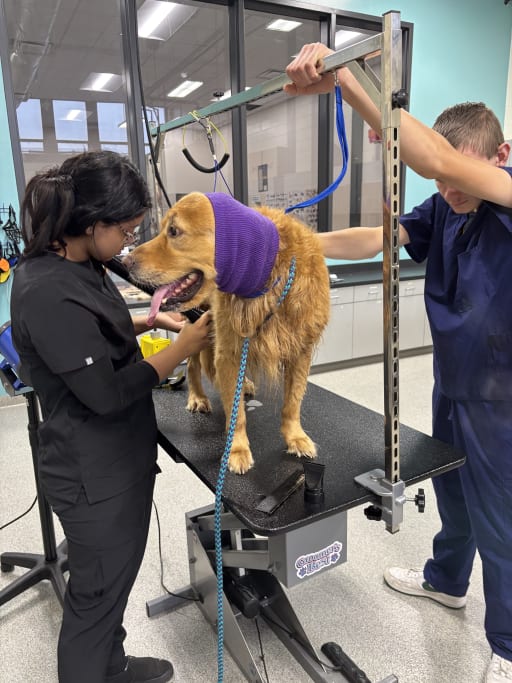
Students learn how to care for and manage small animals, focusing on instructional areas in animal health, nutrition, management, reproduction, and evaluation. Course content also includes instruction in the tools, equipment, and facilities for small animal care, and provides activities to foster leadership development. Live animal handling may occur. FFA, SAE, or related student organization activities are encouraged.
Small Animal Care II
Students develop their skills in the training and grooming of companion animals, focusing on specific needs of various breeds. Instruction includes handling animals and grooming/caring for coats, as well as technical and maintenance functions related to animal health. Live animal handling will occur. The course also includes technical office-management instruction and affords students the opportunity to practice leadership skills. FFA, SAE, or related student organization activities are encouraged.
Certification available: National Association of Professional Pet Sitters (NAPPS) NOTE: This course has specific state laws and regulations from a governing medical board or agency.
Veterinary Science I
This course prepares students for postsecondary education and/or careers in veterinary medicine or related fields. Students develop their skills in anatomy, nutrition, medical terminology, sanitation, clinical exams, and handling animals. Live animal handling may occur. Course content also includes facility maintenance, and office functions, as well as safety practices. The National FFA Organization, Supervised Agricultural Experience (SAE), or related student organization activities are encouraged.
Veterinary Science II
Students expand their knowledge of animal science and the care of animals, including animal structure and function, microbes and disease prevention, parasitology, and genetics and breeding. Students develop more advanced skills and techniques for assisting the veterinarian/technician in the following areas: performing first aid and surgery, applying aseptic techniques, performing technical functions, administering medication, handling death and dying, working with wildlife, and performing office functions. On-the-job clinical instruction coordinated by the instructor may be included in veterinary offices or animal clinics.
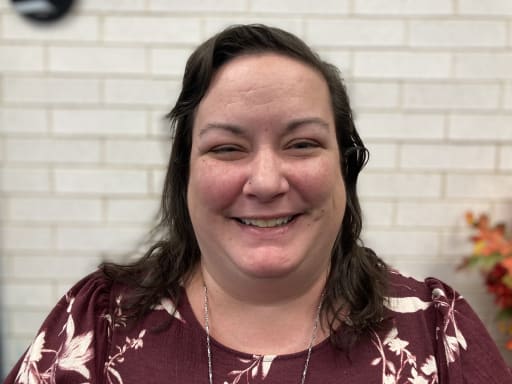
Teacher: Rebecca Miley
Class: Small Animal Care I/II
Years of Experience: 6
Ms. Miley, a Richmond native, has been teaching Small Animal Care at Richmond Technical Center since 2019. With a passion for animal care and teaching people new things, she strives to create an engaging and supportive learning environment for all students and create a classroom that feels like a job rather than a class.
She received her Bachelor of Science in Entomology and Pre-Veterinary Sciences from the University of Delaware in 2010. She was also an intern in the nutritional department at the Smithsonian National Zoological Park while working on a thesis at the University of Maryland. She then became a registered Laboratory Animal Technician and worked for the University of Maryland, Baltimore County. After a few years, and a son, Ms. Miley came back to Richmond and decided to complete her Career Switcher teacher certification and was fortunate enough to come to the Richmond Technical Center.
In addition to teaching, Ms. Miley is involved in FFA, Climate and Culture Committee, Special Events committee, and volunteering at the SPCA with students. She believes in the importance of teaching students professional soft skills to take into the workforce.
Ms. Miley is dedicated to preparing students for their future careers. She integrates real-world skills into the curriculum, focusing on taking initiative, record keeping, proper sanitation, time management, and even budgeting. She also emphasizes the importance of volunteering at the SPCA, participating in the school grooming enterprise, and completing the National Association of Professional Pet Sitters Certification course to help students understand various career paths.
Teacher: Ms. Rosa Leon
Class: Veterinary Science
Years of Experience: 2
Ms. Rosa has been teaching Veterinary Science at Richmond Technical Center since 2022. With a passion for animals and exposing students to the inner workings of the animal field, she strives to create an engaging, creative, and supportive learning environment for all students.
She received her Bachelor of Science Degree in Agriculture with a concentration in Pre-Veterinary Medicine from Virginia State University. Ms. Rosa interned with the Animal Science and Forestry & Wildlife Departments at North Carolina State University to assist in a cattle weaning thesis. Simultaneously she worked as a veterinary assistant/technician for 6 years. This passion led her back to RTC, the very school that started her interest in animals.
In addition to teaching, Ms. Rosa is involved in the Special Events committee at RTC, advises for FFA, and volunteers at Richmond SPCA with her students. She believes in the importance of intrinsic motivation and resiliency.
Ms. Rosa is dedicated to preparing students for their future careers. She integrates real-world skills and hands-on experiences into the curriculum, focusing on critical thinking, communication, integrity, resiliency, and technical skills. She also emphasizes the importance of exploring every opportunity and [career exploration, internships, or connections with local businesses/organizations] to help students understand various career paths.
-
Entrepreneurship /Advanced Entrepreneurship
Entrepreneurship
This course introduces students to the exciting world of creating, owning, and launching their own business. Students will learn concepts and techniques for planning an entrepreneurial venture, using design thinking and business model development. Students will learn about financial statements, marketing principles, sales and customer service, and basic economic principles for successful operation. (This course may be offered as a complement to an existing concentration sequence in any Career Cluster. In some instances, where noted, it may be combined with specific courses to create concentration sequences.)
Advanced Entrepreneurship
This course is designed for students who wish to concentrate on advanced strategies for entrepreneurship, building upon concepts introduced in Entrepreneurship (9093). The focus of the course is on development of a business plan and small business management. Students will establish, market, and maintain a business.
-

GRAPHIC DESIGN
-

CARPENTRY

ELECTRICITY

WELDING
-

EDUCATION
-
Health Sciences
- Nursing
- Pharmacy
- Sports Medicine
- Emergency Medical Technician and Responder
Introduction to Health & Medical Sciences; Medical Terminology
The following sequence of courses provides a foundation for the five health science programs at RTC: Emergency Medical Technician, Nurse Aide, Pharmacy Technician, Sports Medicine (Personal Trainer) and Principles of the Biomedical Sciences /Human Body Systems.
Introduction to Health & Medical Sciences
This course introduces the student to a variety of healthcare careers and develops basic skills required in all health and medical sciences. It is designed to help students understand the key elements of the U.S. healthcare system and to learn basic healthcare terminology, anatomy and physiology for each body system, pathologies, diagnostic and clinical procedures, therapeutic interventions, and the fundamentals of traumatic and medical emergency care. Throughout the course, instruction emphasizes safety, cleanliness, asepsis, professionalism, accountability, and efficiency within the healthcare environment. Students also begin gaining job-seeking skills for entry into the health and medical sciences field. In addition, instruction may include the basics of medical laboratory procedures, pharmacology fundamentals, biotechnology concepts, and communication skills essential for providing quality patient care.
Medical Terminology
Medical Terminology is designed to help students learn common medical terms essential for patient care. Topics are presented in logical order, beginning with each body system's anatomy and physiology and progressing through pathology, laboratory tests and clinical procedures, therapeutic interventions, and pharmacology. Students learn concepts, terms, and abbreviations for each topic.

Principles of the Biomedical Sciences (PLTW)
Principles of the Biomedical Sciences
In this specialization course for Project Lead the Way (PLTW), students are taught concepts of forensic inquiry, DNA and inheritance, and the function of human body systems, exploring the body through diseases, such as those leading to diabetes and heart, sickle cell, and infectious diseases. Students also explore medical interventions, postmortem examination, bioprocessing, bioinformatics, and concepts of microbiology and genetic engineering.
Human Body Systems (PLTW)
Human Body Systems
Step inside the human body and explore the systems that help us move, protect us from disease or injury, and facilitate communication with the body and with the outside world. Solve a medical mystery. Analyze a medical case file and diagnose disease. Design experiments to explore structure and function of the human body. How do the systems of the body work together to keep us well? In the Human Body Systems (HBS) course, students examine the interactions of body systems as they explore identity, communication, power, movement, protection, and homeostasis. Students design experiments, investigate the structures and functions of the human body, and use data acquisition software to monitor body functions such as muscle movement, reflex and voluntary action, and respiration. Exploring science in action, students build organs and tissues on a skeletal manikin, work through interesting real world cases, and often play the role of biomedical professionals to solve medical mysteries. Students practice problem solving with structured activities and progress to open-ended projects and problems that require them to develop planning, documentation, communication, and other professional skills.
Radiologic Technology I, II
Radiologic Technology I
Students will gain a basic understanding of the historical development and role of a radiologic technologist within the healthcare setting, as well as obtain basic knowledge of human anatomy, physiology, basic disease processes, and the essentials of patient care. This course will also explain the legal, ethical, and professional responsibilities associated with becoming a radiologic technologist, while emphasizing the importance of good communication and critical-thinking skills. Mastery of the material in this course would provide students with a strong background should they wish to pursue certification in areas such as first aid, CPR, or AED. Contextual instruction and student participation in co-curricular career and technical student organization (CTSO) activities will develop leadership, interpersonal, and career skills. High-quality work-based learning (HQWBL) will provide experiential learning opportunities related to students' career goals and/or interests, integrated with instruction, and performed in partnership with local businesses and organizations.
Radiologic Technology II
Students will identify the basic components and functions associated with radiologic equipment and develop a scientific understanding of the technical factors and physical concepts required to produce and evaluate quality images. They will practice the use of radiation protection techniques, such as the as low as reasonably achievable (ALARA) principle, and explore imaging modalities. Students will also investigate career opportunities and the processes to obtain and maintain professional certifications within the field of imaging sciences. Contextual instruction and student participation in co-curricular career and technical student organization (CTSO) activities will develop leadership, interpersonal, and career skills. High-quality work-based learning (HQWBL) will provide experiential learning opportunities related to students' career goals and/or interests, integrated with instruction, and performed in partnership with local businesses and organizations.
Medical Laboratory Technology I, II
Medical Laboratory Technology l
Students will identify the basic components and functions associated with radiologic equipment and develop a scientific understanding of the technical factors and physical concepts required to produce and evaluate quality images. They will practice the use of radiation protection techniques, such as the as low as reasonably achievable (ALARA) principle, and explore imaging modalities. Students will also investigate career opportunities and the processes to obtain and maintain professional certifications within the field of imaging sciences. Contextual instruction and student participation in co-curricular career and technical student organization (CTSO) activities will develop leadership, interpersonal, and career skills. High-quality work-based learning (HQWBL) will provide experiential learning opportunities related to students' career goals and/or interests, integrated with instruction, and performed in partnership with local businesses and organizations.
Medical Laboratory Technology II
Students will identify the basic components and functions associated with radiologic equipment and develop a scientific understanding of the technical factors and physical concepts required to produce and evaluate quality images. They will practice the use of radiation protection techniques, such as the as low as reasonably achievable (ALARA) principle, and explore imaging modalities. Students will also investigate career opportunities and the processes to obtain and maintain professional certifications within the field of imaging sciences. Contextual instruction and student participation in co-curricular career and technical student organization (CTSO) activities will develop leadership, interpersonal, and career skills. High-quality work-based learning (HQWBL) will provide experiential learning opportunities related to students' career goals and/or interests, integrated with instruction, and performed in partnership with local businesses and organizations.
-

LAW AND PUBLIC SAFETY
-

CULINARY ARTS
-
COSMETOLOGY

Master Barber I, II, III
Master Barber I
Barbering is the study of hair, scalp, and skin. Students study and prepare in a clinical lab setting, using mannequins and live models for manipulative practice. The program emphasizes safety and sanitation, communication, and management skills. Related areas of study include psychology, ethics, and professional image. Competency completions prepare the students to work or apprentice in a local barber shop or beauty salon.
Master Barber II
Students apply their knowledge of barbering skills in a clinical lab setting, using mannequins and live models for manipulative practice. The program emphasizes safety and sanitation, communication skills, and management of a barber shop or beauty salon. Related areas of study include psychology, ethics, and professional image. Competency completions prepare the students for the Virginia state licensing exam.
Master Barber III
In this advanced course, students build on their theoretical foundation of general sciences and practices in barbering to increase proficiency in hair cutting and styling on live models, with attention to professionalism, client consultation, safety, and infection control. Students are trained in safe chemical processes related to chemical texture services and advanced hair coloring techniques. They also develop artistic skills with wigs and hair additions. An advanced business management unit focuses on managing the shop. Competency completion prepares the student for the Virginia State Licensing Exam. Students can combine classroom instruction and supervised on-the-job training in an approved position or internship with continuing supervision throughout the school year.
Barbering students must satisfy a minimum of 840 hours of instruction in a two- or three-year coherent sequence of courses to be eligible to take the Board for Barbers and Cosmetology licensing examination. Upon successful completion of the program, students may earn the Virginia Board for Barbers and Cosmetology license. For more information, see Superintendent’s Memo 075-16 and Superintendent’s Memo 072-17.
-

TECHNOLOGY EDUCATION
-

TRANSPORTATION
Loading document viewer...